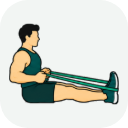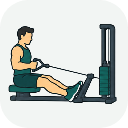
The seated cable row pulls a handle to your stomach against a cable, which keeps tension on the back at both ends of the rep — at full stretch, where a dumbbell has almost none, and at the contraction. It is also the most forgiving row to get right, because the seat and footplate take the position out of your hands entirely.
How to do it
- Sit tall with a slight forward lean at the start and soft knees.
- Pull to your navel and hold for a beat before letting it back out.
Common mistakes
- Rocking back and forth from the hips to move the stack.
What it trains
- Upper back
- retracts the shoulder blades as the handle comes in
- Lats
- drive the elbows back past the torso, more so with a close neutral grip
- Biceps
- bend the elbows through the second half of the pull
- Lower back
- holds the torso upright — it should not be swinging
Variations and alternatives
Common questions
Should I lean back on seated cable rows?
Only a few degrees, and only as part of the pull rather than a rocking motion. Rowing from upright to well behind vertical adds weight to the stack and takes it off your back, which is exactly backwards. If you need the swing to finish the rep, the weight is wrong.
Which handle should I use?
The close V-handle for the lats, a wide bar for the upper back and rear delts. They are different enough to be worth logging separately, and the weight you can pull on each will differ by a fair margin.
Should I let the weight stretch my arms forward at the bottom?
Let the shoulder blades travel forward while the lower back stays still. That stretch under tension is most of what the cable gives you over a dumbbell, so cutting the rep short at the bottom throws away the machine's main advantage.
In StackUp. Logged as weight and reps per set, and your heaviest working set decides whether the weight goes up next time. Get the app.
Back