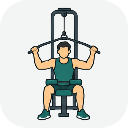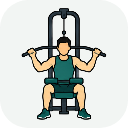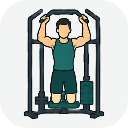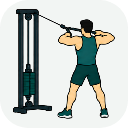
The face pull is a cable pulled to eye level with a rope, elbows flaring wide and hands finishing beside your ears. It is the one movement most upper-body routines are short of: everything else pulls the arms down or straight back, and this pulls them back and externally rotated, which is what the rear delts and the small muscles behind the shoulder actually do.
How to do it
- Rope at face height, pull toward your forehead with the elbows high.
- Finish by rotating so your hands end up beside your ears.
Common mistakes
- Going heavy. This is a rear-delt and upper-back exercise, not a row.
What it trains
- Rear delts
- pull the upper arms back and out — the prime mover
- Upper back
- retracts the shoulder blades as the rope comes in
- Traps
- the mid and lower fibres hold the shoulder blades down and back
- Rotator cuff
- turns the upper arms outward at the finish, which is the part other pulls skip
Variations and alternatives
Common questions
How high should the cable be for face pulls?
Eye height or a little above, so the rope comes in slightly downhill toward your face. Set too low and it becomes a high row driven by the lats; set far too high and your shoulders shrug up to meet it.
Why do my traps take over on face pulls?
Almost always too much weight. Face pulls use a genuinely light stack, lighter than looks respectable, and the moment it is heavy your shoulders shrug to help. Halve it, keep your shoulders down, and pull the rope apart as it arrives.
How many reps and how often for face pulls?
Fifteen to twenty, two or three times a week. It is a low-fatigue movement that you can put at the end of any upper-body day, and the higher rep range is where it works best — chasing a heavy five-rep face pull gets you the trap version instead.
In StackUp. Logged as weight and reps per set, and your heaviest working set decides whether the weight goes up next time. Get the app.
Back