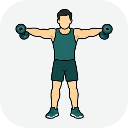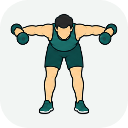
The rear delt fly bends you over and swings the dumbbells out to the sides, loading the back of the shoulder — the one head that no press and almost no row trains well. It is small, unglamorous work on light weight, and it is the difference between shoulders that look built from the front and shoulders that look built from every angle.
How to do it
- Hinge forward until your torso is near parallel, then open the arms wide.
- Thumbs down or neutral, and lead with the elbows.
Common mistakes
- Turning it into a row by pulling the elbows behind the body.
What it trains
- Rear delts
- pull the upper arm back and out — the prime mover
- Upper back
- retracts the shoulder blades, and does the whole rep for you if you let it
- Traps
- assist at the top of the arc
- Lower back
- holds the bent-over position, which is what limits the set for some people
Variations and alternatives
Common questions
How do I stop my back taking over on rear delt flies?
Stop squeezing the shoulder blades together and think about moving your elbows out and away instead. If you deliberately let the blades stay put, the rear delt has to do the work — and the weight will need to come down when you do.
Bent over standing or chest supported?
Chest supported on an incline bench, if you have the choice. It removes the lower back from the equation entirely and stops you rocking, and rocking is how this exercise usually degenerates.
What weight should I use for rear delt flies?
Light — a set of fifteen with 5 to 8 kg is normal, and most people who go heavier are simply rowing. Rear delts respond better to higher reps with strict form than to a load they cannot control.
In StackUp. Logged as weight and reps per set, and your heaviest working set decides whether the weight goes up next time. Get the app.
Shoulders