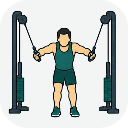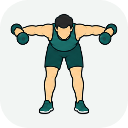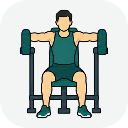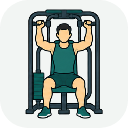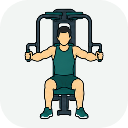
The reverse pec deck is the pec deck run backwards: you sit facing the pad and push the handles apart behind you. It is the most straightforward rear delt exercise in any gym — seat, handles, go — and because nothing needs balancing, it is easy to take to the point where the rear delt actually has to work.
How to do it
- Chest against the pad, arms at shoulder height, and open to a wide arc.
- Squeeze at the end and come back slowly.
Common mistakes
- Setting the handles too high, which recruits the traps instead.
What it trains
- Rear delts
- drive the arms backwards — the prime mover on a fixed arc
- Upper back
- retracts the shoulder blades through the back half of the rep
- Traps
- assist, and take over if you set the handles too high
Variations and alternatives
Common questions
How do I set the reverse pec deck seat?
So the handles sit at shoulder height with your chest against the pad. Too high and the traps take the movement; too low and you end up pulling downward, which is a row.
Should I use the vertical or horizontal handles?
Whichever keeps your palms facing each other or facing down — both work. A neutral grip tends to feel more natural on the shoulder; palms down slightly increases the rear delt bias. It is not a decision worth much thought.
How many reps for rear delts?
Twelve to twenty. The rear delt is small, recovers fast, and responds badly to loads heavy enough to make you cheat — most people are better off adding a set than adding a plate.
In StackUp. Logged as weight and reps per set, and your heaviest working set decides whether the weight goes up next time. Get the app.
Shoulders