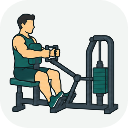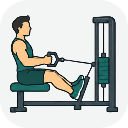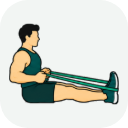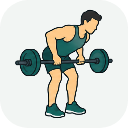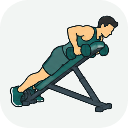
The chest-supported row is a row with your torso lying on an angled pad, which removes the lower back and hip work entirely. That is the whole point: whatever you pull is going into your back, and the set ends when your back is done rather than when your hinge collapses. It is the row to pick if your lower back is already taxed from deadlifts or squats earlier in the week.
How to do it
- The pad removes the lower back from the equation — let it, and stay against it.
- Squeeze the shoulder blades together at the end of each pull.
Common mistakes
- Peeling off the pad on the last few reps, which gives the lower back the load back.
What it trains
- Upper back
- retracts the shoulder blades — the movement is built around this and little else
- Lats
- drive the elbows back past the ribs
- Rear delts
- take more of the work the wider and higher you row
- Biceps
- bend the elbows and are often what fails first on high-rep sets
Variations and alternatives
Common questions
Is a chest-supported row as good as a barbell row?
For building the back, yes, and arguably better because nothing else fails first. What it does not train is holding a heavy hinge, which is a real quality the barbell row builds and carries over to deadlifts. Most people are best served running one of each rather than choosing.
Should the pad be at my chest or my stomach?
High enough that the top edge sits below your collarbone, so your shoulder blades are free to move. A pad that catches your shoulders pins the scapula and cuts the range of the rep in half without you noticing.
Why can I row less here than bent over?
Because you have stopped using your hips. A bent-over row lets you add a small upward heave from the legs and lower back, and that heave is worth a surprising amount of weight. The lower number on the pad is the honest one.
In StackUp. Logged as weight and reps per set, and your heaviest working set decides whether the weight goes up next time. Get the app.
Back