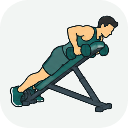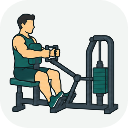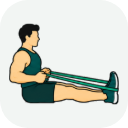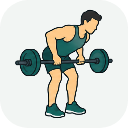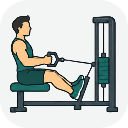
Rowing here means the seated row machine — a horizontal pull with your chest against a pad or your feet on a plate, tracked with weight rather than time. It is the machine most gyms put next to the lat pulldown, and the pair covers both directions of pulling between them.
How to do it
- Keep the torso angle fixed and pull with the back rather than the arms.
- Finish each rep with the shoulder blades together, not with the elbows behind you.
Common mistakes
- Making it an arm exercise — if your biceps fail first, the weight is too heavy.
What it trains
- Upper back
- squeezes the shoulder blades together — the muscle the machine is built around
- Lats
- pull the upper arms back toward your ribs
- Biceps
- bend the elbows, and take more of the work on a neutral or underhand grip
- Rear delts
- assist at the end of the pull, especially with the elbows held wide
Variations and alternatives
Common questions
Is this the same as a rowing machine?
No, and it is worth keeping them apart. This is a strength row logged with weight and reps; the cardio erg you sit on and slide back and forth is a separate exercise tracked by time and distance. StackUp lists that one as Rowing Machine.
Should I pull to my chest or my stomach?
To the lower ribs or the top of the stomach for most setups. Pulling high to the chest with the elbows flared shifts the work to the rear delts and traps, which is fine if that is what you want but is no longer the same exercise.
Should I let my shoulders roll forward at the end of each rep?
Let them travel a little, yes — allowing the shoulder blades to come apart at the front gives the upper back a longer range to work through. What you do not want is the whole torso folding forward to chase extra reach.
Do I still need rows if I do pulldowns?
Yes. A pulldown pulls from overhead and a row pulls from in front, and they load the back differently enough that most routines carry one of each rather than picking a favourite.
In StackUp. Logged as weight and reps per set, and your heaviest working set decides whether the weight goes up next time. Get the app.
Back