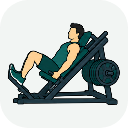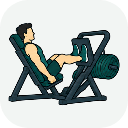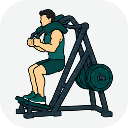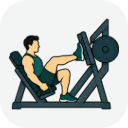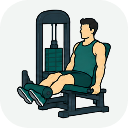
The leg extension is the one movement that isolates the quads with no hip involvement at all — you sit, straighten your knees against a pad, and nothing else can help. That makes it a poor main lift and a very good accessory: it loads the quads at short lengths that squats and presses never reach, and it is easy to take to genuine failure.
How to do it
- Align the machine pivot with your knee joint before the first rep.
- Pause at full extension, which is where the quad is shortest and working hardest.
Common mistakes
- Swinging the weight up and letting it fall back to the stack.
What it trains
- Quads
- extend the knee against the pad — the only muscle moving the weight
- Abs
- keep you from sliding up the seat as the weight gets heavy
Variations and alternatives
Common questions
Are leg extensions bad for your knees?
No, not at sensible loads and a controlled tempo. The shear force on the knee is higher than in a squat, which is why the old advice existed, but healthy knees handle it fine — what causes trouble is slamming into lockout with a weight you are swinging up.
Should I lock out at the top?
Yes, and pause there for a beat. Full knee extension is where the quads are at their shortest and hardest to load, and it is the part of the range no squat or leg press gives you. Stopping short turns it into a partial version of a movement that is already short.
Can leg extensions replace squats?
No. They train one joint with your torso supported, so there is no hip work, no bracing and no load you can keep adding to for years. Use them after your compound leg work, not instead of it.
In StackUp. Logged as weight and reps per set, and your heaviest working set decides whether the weight goes up next time. Get the app.
Legs