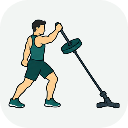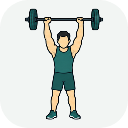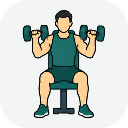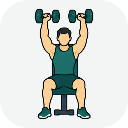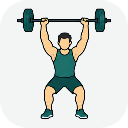
The push press is an overhead press with a short dip and drive from the legs to get the bar moving. That leg drive lets you handle more weight than you can strictly press, so the shoulders and triceps end up grinding out a top-end load they would never reach on their own.
How to do it
- A short dip from the legs, then drive the bar up and finish with the shoulders.
- The dip is shallow and vertical — think about pushing the floor, not squatting.
Common mistakes
- Dipping so deep it becomes a push jerk you did not plan.
What it trains
- Front delts
- take the bar over once the leg drive runs out, roughly at forehead height
- Triceps
- lock out the heaviest overhead weight you will handle in any press
- Quads and glutes
- the dip and drive — where the extra weight actually comes from
- Abs and lower back
- transmit the leg drive into the bar instead of letting the torso fold
Variations and alternatives
Common questions
How deep should the dip be?
Shallow and fast — a few inches, knees only, torso dead vertical. A deep dip turns it into a front squat with a press on the end and kills the elasticity that makes the drive work.
Is the push press just cheating on the overhead press?
Only if you meant to do a strict press. As its own lift it does something strict pressing cannot: it overloads the lockout and the lowering, both of which carry back to your strict press. Log it separately so the two numbers never get mixed up.
What is the difference between a push press and a jerk?
In a push press you drive the bar up and then press it out with your arms. In a jerk you drive it up and drop back under it, catching it with the arms already locked, so you can handle far more weight but the shoulders do far less work.
In StackUp. Logged as weight and reps per set, and your heaviest working set decides whether the weight goes up next time. Get the app.
Shoulders