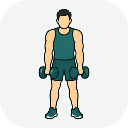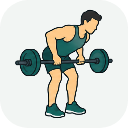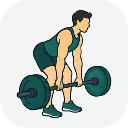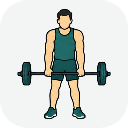
The barbell shrug is the heaviest way to load the traps — the bar lets you handle far more than a pair of dumbbells, which is the only real reason to pick it. The cost is the bar path: the plates sit in front of your thighs, so the shrug is slightly forward rather than straight up, and the bottom of the range is cut short where the bar meets your legs.
How to do it
- Straight up and down. The traps lift, they do not rotate.
- Pause at the top rather than bouncing straight back down.
Common mistakes
- Rolling the shoulders, which adds wear and no benefit.
What it trains
- Traps
- elevate the shoulder blades against the heaviest load you can give them
- Forearms
- hold a very heavy bar — the usual reason a set ends
- Upper back
- holds the shoulders back so the bar does not pull you into a slouch
Variations and alternatives
Common questions
Barbell shrugs or dumbbell shrugs?
Barbell if you want maximum load, dumbbells if you want a cleaner straight-up path and a deeper bottom position. Most people are best off doing barbell shrugs heavy for lower reps and dumbbells for the higher-rep work.
Should I shrug in front of or behind my body?
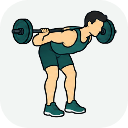
In front is standard. Behind the back, the bar path is straighter and the bottom range is deeper, but it is awkward to unrack and the grip width is dictated by your hips. Try it if the front version bothers your shoulders; do not expect a different muscle.
How heavy should shrugs be?
Heavy enough that a one-second pause at the top is hard, which for most people is well under what they can bounce. A shrug you can only do by rebounding at the bottom is measuring your ability to rebound. Pause every rep and the honest weight appears.
In StackUp. Logged as weight and reps per set, and your heaviest working set decides whether the weight goes up next time. Get the app.
Back