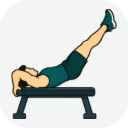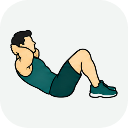
The sit-up takes your whole torso from flat on the floor to upright, which means the hip flexors do a large share of the work alongside the abs. It is the older, longer-range cousin of the crunch, and it is easy to load — a plate held on your chest turns it into a progressive exercise rather than a rep count.
How to do it
- Come all the way up with a rounded spine rather than a straight one.
- Anchor the feet only if you cannot come up without it.
Common mistakes
- Using anchored feet to swing up with the hip flexors.
What it trains
- Abs
- curl the spine for the first part of the rep, before the hips take over
- Hip flexors
- pull the torso the rest of the way upright — a bigger share than most people assume
- Obliques
- keep the torso travelling straight rather than veering to one side
Variations and alternatives
Common questions
Should I anchor my feet for sit-ups?
Only if you want the hip flexors doing more. Anchored feet let you use them harder and get more reps; unanchored keeps the emphasis nearer the abs. Neither is wrong, but the two are not the same exercise and their rep counts are not comparable.
How do I add weight to sit-ups?
Hold a plate or a dumbbell against your chest, and move it behind your head once your chest gets easy — the further from the hips, the harder the rep. That is the sensible way to progress once bodyweight sets run past fifteen.
Are sit-ups or crunches better?
For the abs alone, the crunch is more targeted. For a movement that loads well and carries over to getting off the floor, the sit-up. Most people do not need both — pick the one that does not bother your lower back and load it.
In StackUp. Logged as reps per set. Add weight if you use a belt or a dumbbell and StackUp progresses it like any other lift. Get the app.
Core